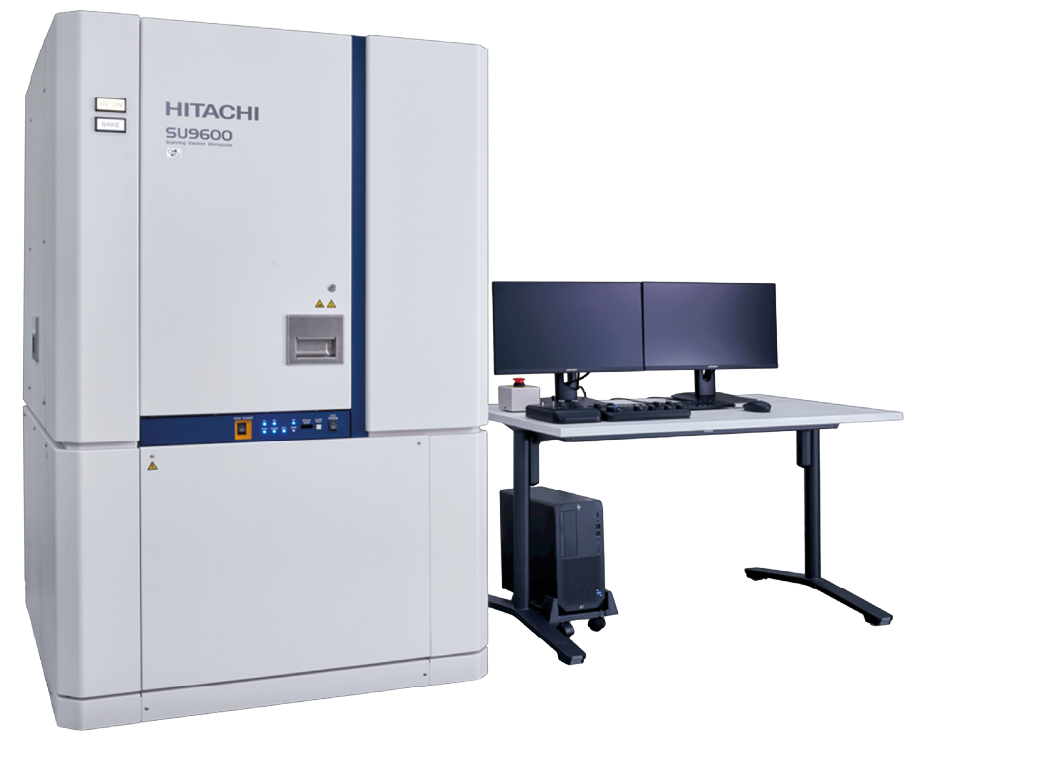
SU9600
Bridging the Gap Between SEM and TEM
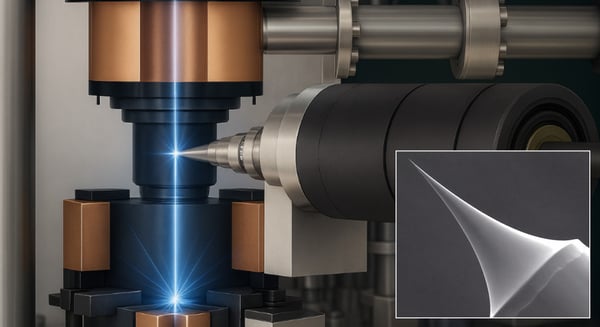
- NEG* cold field-emission electron source.
- 0.4 nm resolution at 30 kV and 0.6 nm at 1 kV - the world's highest SEM resolution.
- Super ExB technology: Get images with excellent signal-to-noise ratio and contrast, even at low probe-currents.
- Low-aberration magnetic immersion lens with upper and lower pole-piece.
* Non-Evaporable Getter
- Complete lineup of detectors to collect secondary electron (SE), backscattered electron (BSE), bright and dark field transmission electron (BF-TE, DF-TE) signals.
- Low-kV STEM, EDX and EELS analysis.
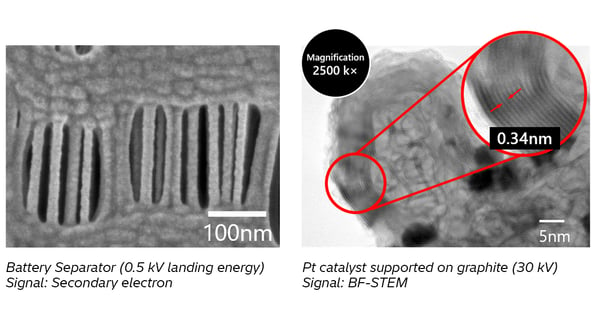
- 0.34 nm STEM resolution guaranteed, 0.2 nm attainable
- Enhanced scanning capabilities and EMFC** for faster, automated workflows.
** Electron Microscopy Flow Creator software
Overview
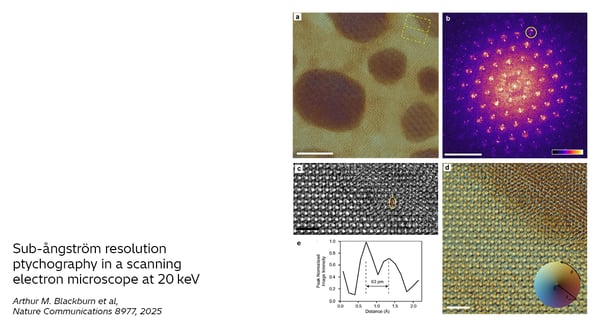
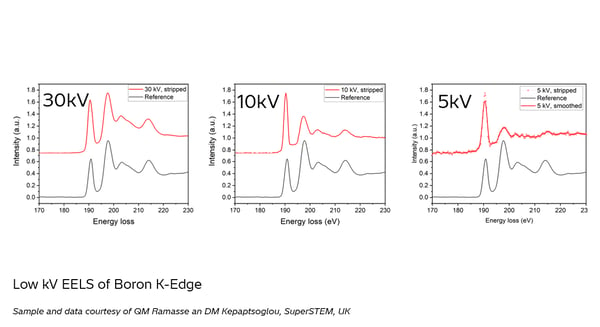
Decreasing feature sizes in materials science means nanometer-scale imaging and analysis with SEM is more crucial today than ever. Hitachi High-Tech Co. has developed the SU9600 cold field emission scanning electron microscope (CFE-SEM), boasting the world's highest SEM resolution of 0.4 nm at 30 kV. You can perform high resolution, low-kV STEM, EELS and diffraction analysis, techniques that were previously reserved for 200–300 kV TEMs.
Features and benefits
-
Cold field emission electron source
- NEG cold field emission (CFE) electron source for high resolution.
- The SU9600 is equipped with our latest electron gun, providing the highest gun brightness and a stable beam irradiation using a patented mild flashing technology.
- Acquire images with a high S/N ratio from 0.01 – 30 kV landing voltages.
- Perform automated, overnight measurements of nanoscale samples with EMFC.

-
Super ExB technology
- Efficient detection of secondary electrons (SE), without changing the trajectory of the primary electrons.
- Made possible by forming a mutually orthogonal electric and magnetic field (ExB field) above the objective lens. As there is neither a retarding or boosting electrical field, various filtering methods for SE can be applied.

-
Low-aberration magnetic immersion objective lens
- The magnetic immersion objective lens reduces spherical and chromatic aberration by shortening the focal length—just like in a TEM.
- Compared to conventional lens designs, the Hitachi SU9600’s “true in-lens concept” lets you get higher resolution images, resolving lattice information down to 0.2 nm.
- The SU9600 uses a TEM-like side-entry holder. You get stable imaging even in an industrial environment or at higher floor levels.

- The magnetic immersion objective lens reduces spherical and chromatic aberration by shortening the focal length—just like in a TEM.
-
Complete lineup of detectors
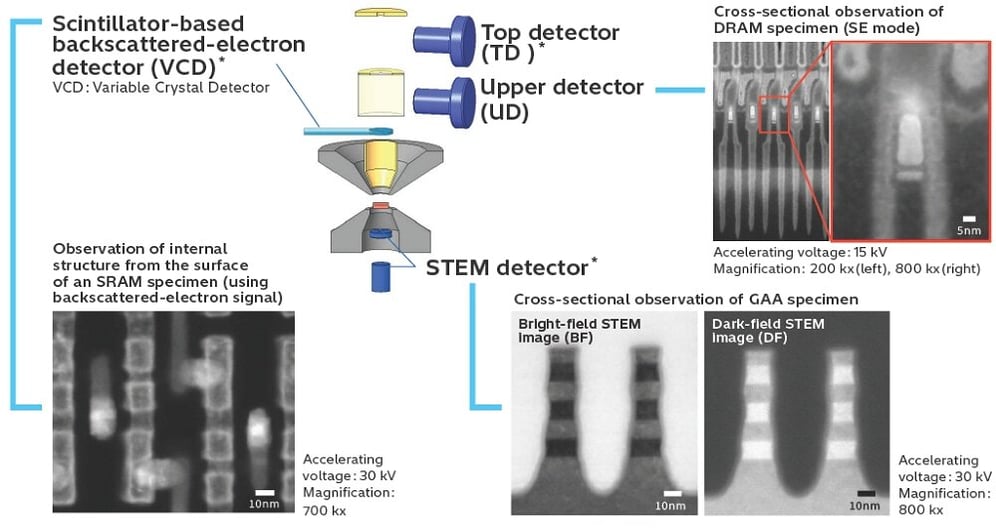
- The SU9600 uses multiple detectors to collect secondary electron (SE), Low Angle, High Angle backscattered electron (LA-BSE, HA-BSE), Bright and Dark field Transmission Electron (BF-TE, DF-TE) signals.
- New secondary electron signal control and a SE/BSE high pass filter enable different observation modes. Optimize these modes for any type of specimen.
- The new variable crystal detector (VCD), a scintillator-based backscattered-electron detector, improves response times and makes it easier to pinpoint specific regions.

-
Enhanced scanning capabilities
- The SU9600 gives you many improved scanning capabilities to optimize image acquisition for specific purposes.
- Combine with EM Flow Creator to automate your workflows.

-
Correlative SEM and TEM in one instrument
- The SU9600 is an easy-to-use SEM, but can take over microscopy work that is normally assigned to a TEM.
- The Through-the-lens SE and BSE detectors work at 30 kV and can be combined simultaneously with both Bright- and Dark Field TE signals.
- Due to its unique lens design, lattice resolution of 0.34 nm and a lateral EDX resolution of down to 1 nm can be achieved at the same working distance. This makes operation easier and increases sample throughput.
- STEM diffraction and scattering contrast can be optimized by a three step Bright Field Aperture (BFA) and a dual BF/DF-STEM detector, respectively. DF scattering angles range from 70 to 700 mrad.
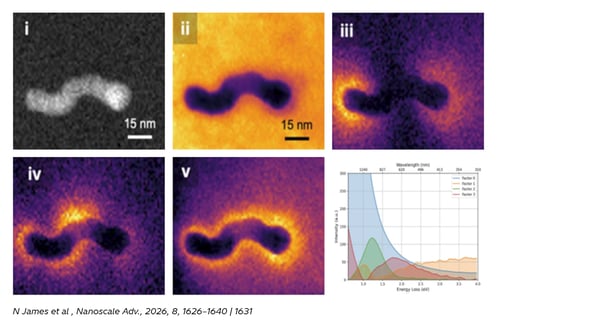
- A Hitachi Electron Energy Loss Spectrometer (EELS) is available for enhanced analytical mappings of light elements and their binding energy.
Applications gallery
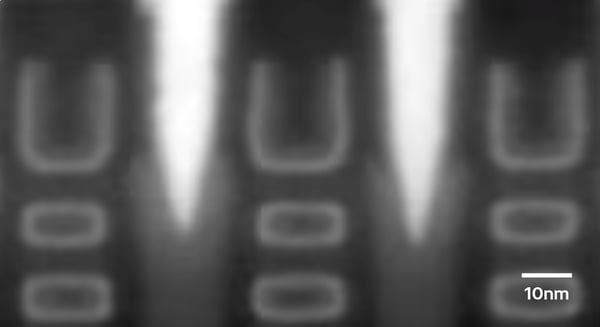
Nanoscale structure of single-wall carbon nanotubes can be clearly resolved
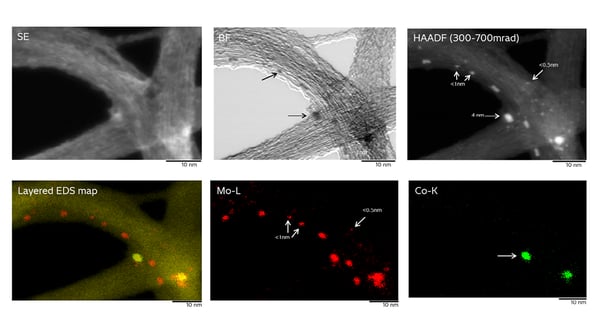
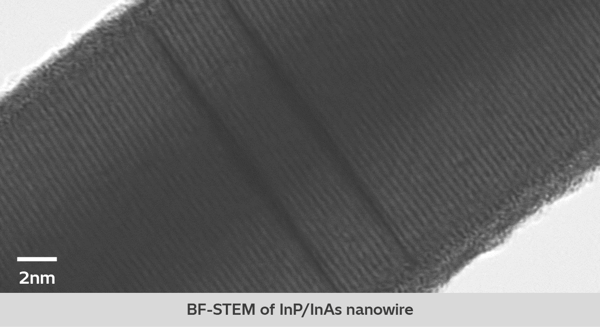
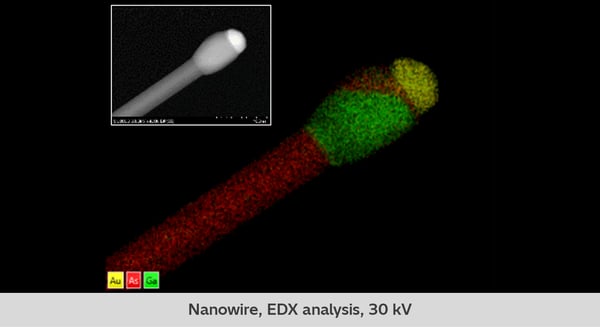
Elemental distribution along the nanowire can be visualised Courtesty of Prof Kimberly Dick Thelander, Lund University
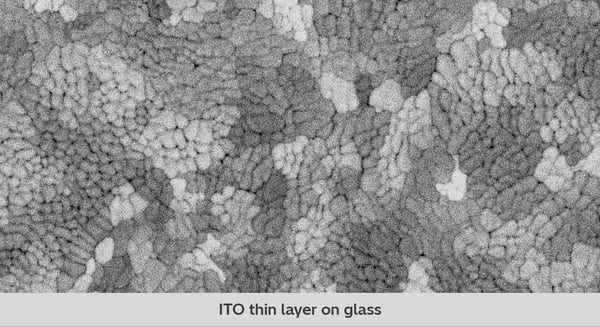
Surface morphology and grain structure can be observed
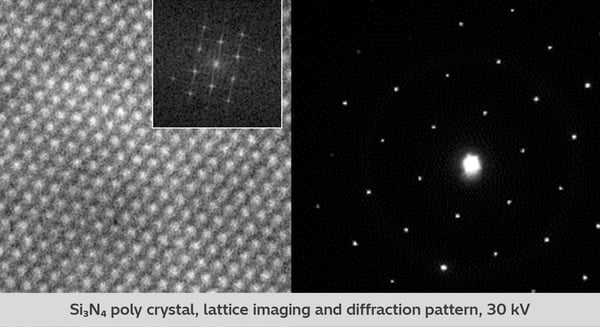
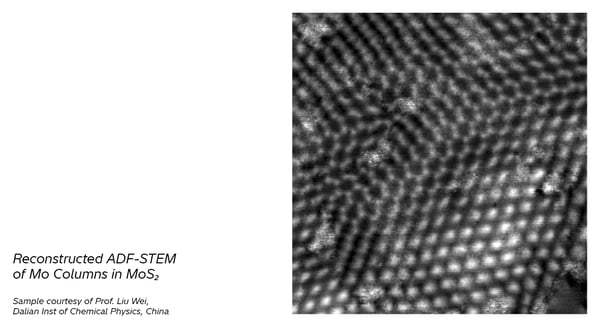
Atomic-level lattice structure and diffraction pattern can be analysed
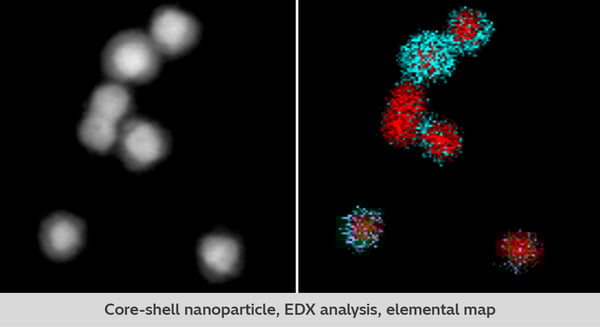
Elemental distribution of Ag and Cu can be clearly identified Courtesy of Dr. Dai Mochizuki, Tokyo Institute of Technology
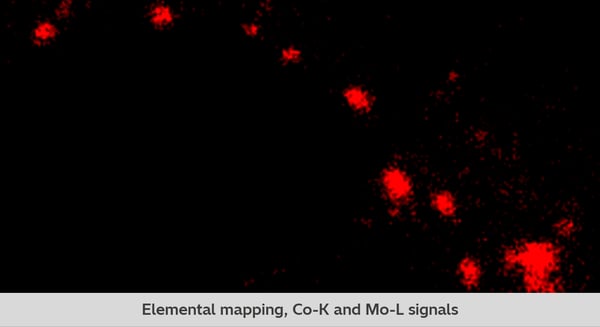
Elemental composition can be visualised at the nanoscale
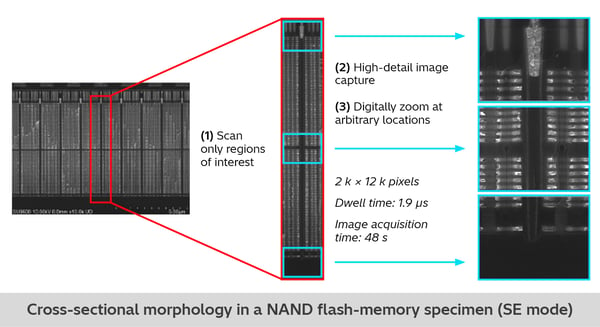
Layered structures and material interfaces can be clearly observed
Internal features can be visualised using compositional contrast
Specifications
| SE image resolution | Secondary Electron Image Resolution: 0.4 nm @ 30 kV 1.0 nm @ 1 kV 0.6 nm @ Landing Voltage of 1 kV*1 |
| STEM image resolution*2 | 0.34 nm @ 30 kV (lattice image) |
| Accelerating Voltage | 0.5 to 30 kV |
| Landing Voltage*1 | 0.01 to 20 kV |
| Electrical image shift | Up to ±5 µm (Specimen height = 0.0 mm) |
| Stage traverse | X: ±4.0 mm, Y: ±2.0 mm, Z: ±0.3 mm, T: ±40° |
| Specimen size - Flat specimen stage | 5.0 mm × 9.5 mm × 3.5 mm (H) (Max.) |
| Specimen size - Cross section specimen stage | 2.0 mm × 6.5 mm × 5.0 mm (H) (Max.) |
* 1: With optional deceleration holder and top detector.
* 2: Option
Contact us
The SU9600 is a powerful CFE-SEM platform that puts sub-nanometer resolution imaging within reach of any lab. Many of its capabilities, such as low kV STEM and EELS, are traditionally available only using a 200-300 kV TEM. Our experts can guide you through every aspect, from sample prep strategies to low-kV imaging workflows and analytical STEM. Want to learn more? Let's talk.