
7 min read
For research labs and core facilities, choosing a high-performance SEM is a major capital purchase, reflecting months of planning and internal justification.
And a crucial factor to consider when making your choice is the electron source. The source shapes the instrument’s broader character, including factors such as,
- How stable the beam is over time
- How much maintenance is needed
- How well the system supports analytical work
- How forgiving it will be in day-to-day operation
The source influences not just what the microscope can achieve on paper, but how well it fits the realities of your lab.
For buyers evaluating field emission SEMs, the choice comes down to two source types: cold field emission (CFE) and Schottky sources. Both represent a major step forward from older thermionic sources, and both are capable of excellent performance. So, the question is not which one is universally better, but which one is better aligned with your needs.
This article aims to help you make this decision with more confidence. Rather than treating CFE and Schottky as a simple winner-versus-loser comparison, you’ll get a practical framework for understanding the trade-offs between them, so you can choose the source that best matches the kind of work your SEM needs to do.
Cold Field Emission vs. Schottky: How Each Source Works
| Feature | Cold Field Emission (CFE) | Schottky |
|---|---|---|
| How electrons are generated | Electrons are emitted by quantum tunnelling from a very sharp tungsten tip under a strong electric field, with no heating required | Electrons are emitted from a zirconium oxide-coated tungsten tip using a combination of heat and electric field assistance |
| Tip operating temperature | Room temperature | Typically 1700–1850 K |
| Energy spread | Very low, typically around 0.2–0.3 eV | Higher, typically around 0.6–1.1 eV |
| Low-kV imaging performance | Excellent; especially strong below 1 kV where low energy spread helps reduce chromatic aberration | Strong, but generally not as sharp as CFE at very low accelerating voltages |
| Virtual source size | Very small, typically around 2.5–5 nm | Larger, typically around 15–30 nm |
| Brightness | Very high; up to about 10⁹ A/cm²·sr | High, but generally lower than CFE |
| Surface-sensitive imaging | Well suited to fine surface morphology, beam-sensitive samples, thin films, and nanomaterials | Good, but usually chosen less for ultimate surface resolution and more for overall robustness |
| Beam stability over time | Less stable; emission can fluctuate as contaminants adsorb onto the tip | Very stable; heated tip resists contamination and supports long, consistent runs |
| Maintenance behaviour | Needs periodic flashing to clean the tip and restore stable emission | No flashing needed in normal use |
Table 1: Core technical and operational differences between CFE and Schottky electron sources
At a high level, both cold field emission and Schottky sources generate electrons from a very sharp tungsten tip under a strong electric field.
In a cold field emission source, the tungsten tip is sharpened to an extremely fine point, typically with a tip radius on the order of 100 nm. When a high electric field is applied, it narrows the energy barrier at the tip surface enough for electrons to pass through by quantum tunnelling.
The tip operates at room temperature, and the source produces an exceptionally narrow, highly coherent beam. CFE sources are associated with the highest beam quality and strongest low-voltage imaging performance.
A Schottky source works differently. It also uses a tungsten emitter, but the tip is coated with zirconium oxide. That coating matters because it lowers the work function of the tungsten surface, reducing the energy needed for electrons to escape. Instead of relying on tunnelling alone, the Schottky emitter is heated continuously, typically to around 1700–1850 K, while also being assisted by an electric field.
For you, the key point is that CFE is optimized for an exceptionally fine, pure electron beam. Schottky is optimized for robust, stable emission under a wider range of routine working conditions.
So, the choice between them is less about selecting a “better” source and more about deciding which type of performance matters most in your lab.
Beam Quality: Where CFE wins
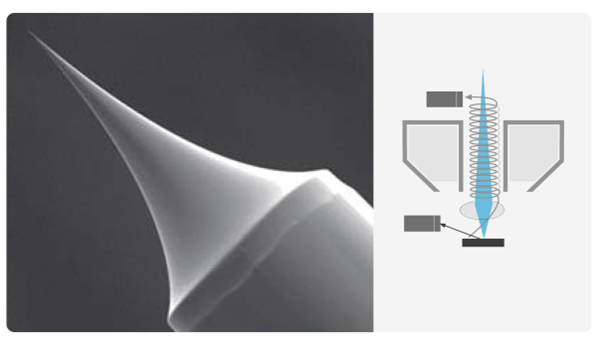
Image 1: Small CFE source size
When customers compare cold field emission and Schottky sources, beam quality is where the case for CFE is strongest.
One of the biggest differences between the two is energy spread. A CFE source typically produces an energy spread of around 0.2–0.3 eV, compared with roughly 0.6–1.1 eV for a Schottky source.
So, the electrons in a CFE beam are more uniform in energy. The more uniform the beam, the easier it is for the lens system to bring those electrons to a tight common focus, which contributes to sharper imaging.
This matters because of chromatic aberration. In an SEM column, electrons with slightly different energies don’t focus at exactly the same point. The wider the spread of energies, the more blur this introduces into the final probe.
At higher accelerating voltages, that effect may be manageable. At low kV, particularly below 1 kV, it becomes one of the main limits on resolution.
CFE has a clear advantage here. Its narrower energy spread helps preserve probe sharpness in the very operating range where many users are trying to image delicate surfaces, thin films, nanomaterials, and non-conductive samples without coating.
Brightness is also important. CFE sources can reach brightness values up to 10⁹ A/cm²·sr, roughly an order of magnitude higher than Schottky sources. For the user, higher brightness means more usable signal even at lower beam currents and smaller probe sizes.
More brightness is especially valuable when imaging beam-sensitive, uncoated, or surface-sensitive specimens, where you want to extract as much detail as possible without increasing the dose.
Taken together, these factors explain why CFE is the preferred source for the most demanding low-voltage imaging applications. When the priority is resolving the finest surface detail, minimising beam-induced damage, or pushing SEM performance at the nanoscale, CFE gives your microscope a fundamental beam-quality advantage that Schottky sources don’t match.
Stability and daily operation: Where Schottky wins
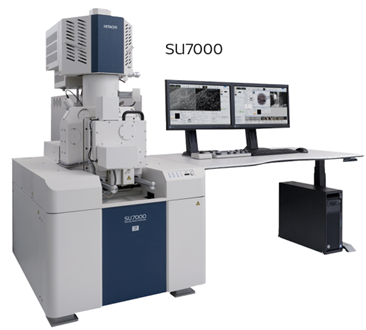
Image 2: Hitachi SU7000 Schottky FE-SEM
If beam quality is the clearest strength of cold field emission, day-to-day stability is where Schottky sources have the advantage. Stability determines how predictable the instrument is to use and how much interruption you’re willing to tolerate.
The core issue with CFE is contamination at the emitter tip. Because the tip runs cold, residual gas molecules inside the column gradually adsorb onto its surface. As that contamination builds, the work function changes and the emission current can drift or fluctuate, sometimes quite noticeably.
So, the beam can become less stable over the course of use, with current variations that may range from around 5% to as much as 30%.
To restore performance, the tip must be “flashed”. Flashing briefly heats the emitter to drive off adsorbed contaminants and recover stable emission.
Low-temperature flashing, typically used to remove hydrogen, usually takes about a minute and does not disturb alignment.
High-temperature flashing is used for heavier contamination, but over time it can slightly affect tip geometry.
None of this makes CFE impractical. But it does mean the source needs periodic maintenance in a way Schottky doesn’t.
Schottky sources avoid most of these issues because the tip is continuously heated. That heat prevents gas adsorption from building up on the emitter surface, giving the source a self-cleaning effect.
Schottky sources typically deliver highly stable emission for extended periods, often with less than 0.5% drift per hour. For users running long analytical sessions or standardised workflows, that kind of consistency is a major advantage.
Analytical performance
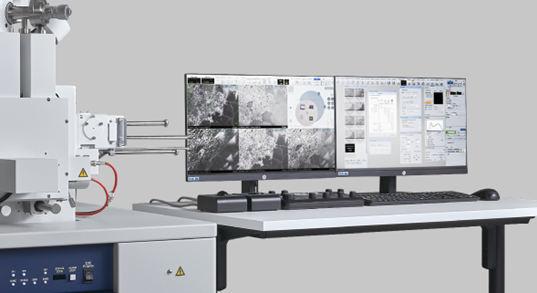
Image 3: Hitachi’s SU8600 Cold Field Emission (CFE)
For analytical work, the key distinction is stability versus low-kV precision.
Schottky remains the stronger all-round choice for sustained analytical workflows such as EDS mapping, EBSD, and especially WDS. These techniques depend on stable beam current over time. Schottky sources are better suited to long time mappings and quantitative microanalysis where drift can compromise results.
CFE has historically been less favoured for these applications, but that’s changing. Newer CFE systems offer higher usable probe currents than earlier generations, making routine EDS more practical.
Where CFE is increasingly compelling is low-voltage EDS. Its smaller probe size at low kV can improve analysis of thin films, coatings, nanoparticles, and other surface-sensitive materials where higher-voltage beams may spread too deeply into the sample.
Decision framework: Which source is right for you?
| Criteria | Cold Field Emission (CFE) | Schottky |
|---|---|---|
| Suitability for shared facilities | Best for trained, dedicated users who can manage source behaviour | Better suited to multi-user labs and facilities with varied operator experience |
| Automated or unattended runs | Less ideal where emission drift or flashing interrupts long workflows | Better for long, predictable automated operation |
| High probe current analytical work | Improving significantly, but historically less suited to sustained high-current analysis | Traditionally stronger for sustained high-current applications |
| EDS mapping | Increasingly capable, especially for low-kV work and advanced systems | Strong choice for routine, high-volume EDS mapping |
| EBSD | Can be used, but beam drift is a limitation for large mapping runs | Generally preferred because stability supports reliable mapping |
| WDS / quantitative microanalysis | Less suitable where beam current drift affects comparison to standards | Preferred choice because beam stability is critical |
| Facility sensitivity | More sensitive to vibration, EMI, and environmental conditions | Generally, more forgiving in standard lab environments |
| Best fit | Labs prioritising low-voltage resolution and nanoscale surface detail | Labs prioritising stability, throughput, analytical versatility, and ease of operation |
Table 2: Workflow, analysis, and lab-fit considerations for CFE vs Schottky sources
The table above summarises where each source works best. Bottom line:
- Choose CFE if your priority is the highest possible low-voltage imaging performance, especially for beam-sensitive, uncoated, or nanoscale surface features. It’s the better fit when a small group of experienced users can manage the instrument closely and when the lab is equipped to support a more demanding source.
- Choose Schottky if your workflow depends on stability, repeatability, and analytical throughput. Usually, the better choice for shared facilities, multi-user labs, routine EDS or EBSD, and environments where unattended or standardised operation matters as much as raw imaging performance.
Making the right choice...
The gap between cold field emission and Schottky is narrower than it once was. Advances in source design and instrument engineering have made CFE more stable and more analytically capable, while Schottky platforms continue to improve in resolution and low-kV performance.
But the core trade-off still holds.
CFE gives you the highest beam quality, with the advantages that matter most for ultra-high-resolution, low-voltage surface imaging.
Schottky gives you greater stability, easier day-to-day operation, and stronger support for routine analytical workflows.
Again, the right choice depends less on which source looks better on a datasheet and more on how the SEM will actually be used.
So, if your priority is extracting the finest possible detail from challenging samples, CFE may be the right fit. If your priority is consistent performance across users, methods, and long analytical sessions, Schottky is likely the better investment.
Visit our product pages to learn more:
SU8600 Cold Field Emission SEM